
Yoruba Naming And Customs Among African Americans At Oyotunji African Village
By Victor Williamson
Jul. 6, 2017
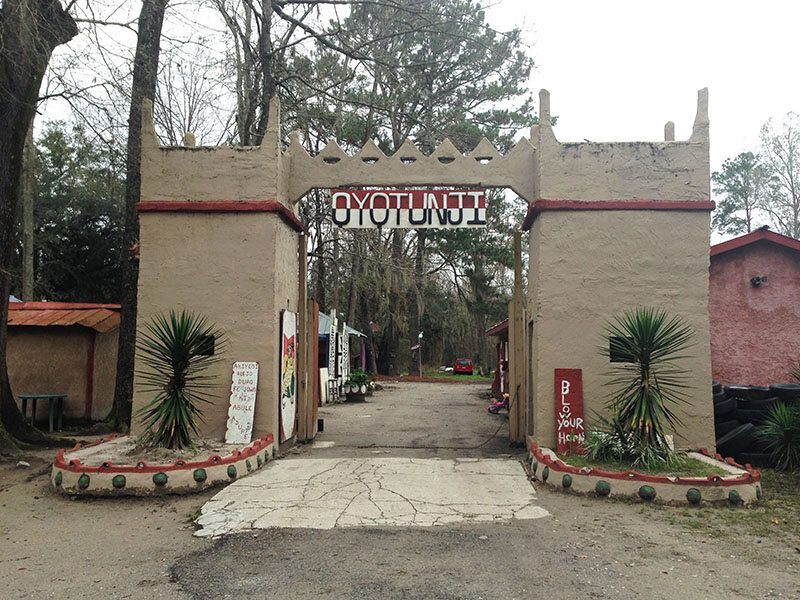 |
Gate to Oyotunji (Ẹnu ọ̀nà sí Ọ̀yọ́túnjí) |
Yoruba naming is done during the traditional naming ceremony on the 9th day for boys and the 7th day for girls. As the African-Americans have no geographic attachment to Yorubaland, it is the job of the Ifa to determine the child's origin within Yorubaland and to give a Yoruba name accordingly. Unlike the name "Oyotunji", which is meant to reflect an African-American Yoruba phenomenon unique to the Americas of an Oyo kingdom rebirth, names given from the Ifa are just like those found throughout Yorubaland. Some of the family names include Awodekun, Alaitan, Adefunmi, Efunbolade, Ogunoye, Akinsegun, Oyelowe, Awolowo, etc.. First names include Adekola, Adebola, Olukemi, Oluyemi, Akinayo, Akinyemi, etc.. In general, because African-Americans are only gradually becoming aware of Yoruba culture, these names can be disseminated to adults as well.
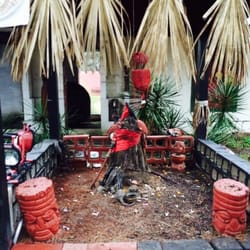 |
Esu Shrine, Oyotunji (Ilé Òrìṣà Èṣù, Ọ̀yọ́túnjí) |
Oyotunji has shrines for Shango, Ogun, Osun, Moremi, Oya, Yemoja and others, but the first and a seemingly central orisha is Esu, the traditional jester or trickster deity, to which there are multiple shrines, one near the front of the village and smaller ones located within other shrines. The importance of Esu is that of a path paver, where, to start your day, Esu is consulted to remove any obstacles to performing ones daily duties. All of the African-American obas are venerated in art along walls of the Aafin palace and all of the Yoruba sculpting and painting in the palace was done by African-Americans based off depictions that they found in pictures. All initiated priests are required to learn the religious form of Yoruba to intercede on behalf of the Ifa, albeit with much of the tonality and the peculiar informalities of everyday speech lost in translation, leaving English and in some instances a local Yoruba-English creole as the primary local dialect of residents.
Nuzzled away in the forest gives Oyotunji a sense of safety and seclusion from the outside world while offering abundant opportunities for raising livestock such as chicken, horses and goats, spattered about with numerous raised bed and tilled gardens for growing apples, bananas, okra, ewedu and other leafy vegetables that are often translated directly from Yorubaland. Its location is not without its problems, as sea islands are prime landing spots during hurricane season. Ironically, during one such recent hurricane, a tornado landed directly behind the oya shrine, the orisha of storms, cutting a wedge along the outer walls and knocking down a tree that landed on one of the shrine roofs, where it lies even till now.
There are separate rites of passage for the girls and boys. Young ladies have to undertake training in table and chair making, native sewing and other skills to become a part of the Egbe Moremi. Young men undertake a number of exercises to show their strength, endurance and courage, not the least of which is walking 40 miles and wading through marshy waste-high water, for which South Carolina does not lack any number of. Again, these rites of passage can be undertaken at any age. Surprisingly, however, preparation and consumption of native Yoruba food is not a standard part of every day life, where the diet is based largely on the native Gullah Geechee cuisine, leaving visitors and residents alike in want of pounded yam, ewedu, egusi, efo, akara, puff puff and other Nigerian dishes, not withstanding the occasional festivals.
Oyotunji has promoted Yoruba culture among African Americans by holding regular tours at the village and by sending delegations to promote Yoruba culture in cities across America. My hometown, Milwaukee's, Juneteenth festival was at some time a regular destination for an Oyotunji delegation that built a mock alaafin palace exhibit along the street. It is common, now, for many adherents to not live on the premises, and to rather have a remote connection either within commuter distance or in far away cities such as Miami, FL. One thing's for sure, Oyotunji has set itself apart as a unique beacon to light a path for the Yoruba tradition in America.
Ìtúmọ̀ sí Èdè Yorùbá (Yoruba Translation):
 |
Ọ̀yọ́túnjí àkọlé ìkíni (Oyotunji Welcome sign) |
Lónìí ni mo ní àǹfààní láti rin Abúlé Afíríkà Ọ̀yọ́túnjí yíká tí ó wà ní Sheldon, SC Gullah Geechee Cultural Heritage Corridor USA. Adéjùyìgbé Adéfúnmi II, ọmọ ti ọba Efuntola Oseijeman Adelabu Adefunmi I, jẹ́ ọba Ọ̀yọ́túnjí, ó sì jẹ́ ènìyàn tí ó rere gan an ni. Efuntola fi ìpìlẹ̀ Ọ̀yọ́túnjí sọlẹ̀ ní ọdún 1970. Ẹ lè kàwé nípa èyí lórí ẹ̀rọ òwú alántakùn. Àwọn gbàjúmọ̀ máa ń wá láti ṣe àbẹ̀wò sí i, bí i Ọọ̀ni ti Ilé-Ifẹ̀ Ọba Adeyeye Enitan Ogunwusi, Ojaja II. Ọ̀pọ̀lọpọ̀ ìyàtọ̀ ni ó wà láàrín Ọ̀yọ́túnjị àti ilẹ̀ Yorùbá. Ó ṣe pàtàkì láti mọ̀ pé olùdásílẹ̀ Ọ̀yọ́túnjí jẹ́ ọmọ Améríkà. Nítorí náà, Ọ̀yọ́túnjí kì í ṣe abúlé Yorùbá nìkan, kúkú abúlé Afíríkà pẹ̀lú.
Ìsọmọlórúkọ tàbí ìkómọjáde ní Ọ̀yọ́túnjí máa ń ṣẹ̀lẹ̀ ní ọjọ́ kẹ́sànán fún àwọn akọ àti ní ọjọ́ keje fún àwọn abo. Àwọn ọmọ Améríká kì í wá láti ilẹ̀ Yorùbá, nítorí náà wọ́n máa ń gbọ́ Ifá fún sísọ ẹni ní. Ìtúmọ̀ orúkọ Ọ̀yọ́túnjí ni pé ìjọba Ọ̀yọ́ tún páda. Àwọn orúkọ Yorùbá tí Ọ̀yọ́túnjí máa ń fi sọ ẹni ní ni wá láti oríṣìríṣì ará ẹ̀yà ní il̀ẹ̀ Yorùbá. Nínú àwọn orúkọ ìdílé náà ni Awodekun, Àlàìtán, Adéfúnmi, Efunbolade, Ògúnoyè, Akinṣẹ́gun, Oyèwọlé, Awólọ́wọ̀, àti bẹ́ẹ̀ bẹ́ẹ̀ lọ. Nínú àwọn orúkọ kìíní ni Adékọ́lá, Adébọ́lá, Olukemi, Olúyẹmí, Akinayo, Akínyẹmí, àti bẹ́ẹ̀ bẹ́ẹ̀ lọ. Ìsọmọlórúkọ ti Ọ̀yọ́túnjí ni ó sì tún yẹ fún àwọn àgbàlágbà nítorí pé wọ́n kò mọ̀ àṣà Yorùbá rí.
Ọ̀yọ́túnjí ní àwọn ojúbọ òrìṣà fún Ṣàngó, Ògún, Ọ̀ṣun, Mọ́remí, Ọya, Yemọja, àti bẹ́ẹ̀ bẹ́ẹ̀ lọ. Èṣù jẹ́ òrìṣà tí àwọn ọmọ ìbílẹ̀ Ọ̀yọ́túnjị máa ń bẹ̀ jù lọ fún ìtọ́jú ara wọn. Iṣẹ́ ọnà wà tí ó ní àwòrán ti àwọn ọba Ọ̀yọ́túnjí lórí ògiri nínú ààfin ọba. Gbogbo àwọn olórìṣà máa ń gbọ́ èdè Yorùbá fún gbígbọ́ Ifá. Àwọn ọmọ ìbílẹ̀ máa ń gbọ́ èdè Gẹ̀ẹ́sì tàbí èdè Yorùbá díẹ̀.
Ọ̀yọ́túnjí wà ní igbó ni níbi tí wọ́n lè máa ń gbìn oríṣìríṣì èso àti ẹ̀fọ́. Àwọn tún jẹ́ olùsin àwọn ẹran ọ̀sìn. Wàhálà kan tí ó wà níbẹ̀ ni pé àwọn ẹ̀fúùfù oníjì líle máa ń bá wọn nígbà tí àsìkò ìjì líle máa dé. Ìjì líle kan lára àwọn bá ba ojúbọ òrìṣà Ọya jẹ́.
Takọ tabo ni wọ́n máa ń di ọmọlúàbí. Kí ó tó dàgbà ni àwọn òbìnrin ní láti kọ́ ìmọ̀ oríṣị̀ríṣì bí i iṣẹ́ ọwọ́ láti wà nínú ẹgbẹ́ Mọ́remí, àwọn ọkùrin sì ní láti rín ogójì ibùsọ̀ àti lílà inú ẹrẹ̀ lọ. Ohun ìyàlẹ́nu ni pé ọmọ ìbílẹ̀ kìí jẹ ounjẹ Yorùba, kàkà bẹ́ẹ̀ wọ́n máa ń jẹ ounjẹ Gullah Geechee. Ṣùgbọ́n wọ́n máa ń sè ounjẹ Yorùbá fún àwọn onírúurú àjọyọ̀ tàbí nígbà àsè.
Ọ̀yọ́túnjí tí gbé àṣà Yorùbá lárugẹ láàrín àwọn ọmọ Améríkà nípaṣẹ̀ àwọn ìrìnkiri yíyí abúlé ká àti àwọn ìrìnàjò sí oríṣìríṣì ìlú Améríkà. Ìlú tèmi ni Milwaukee, nígbà tí a máa ń ṣe àjọyọ̀ Juneteenth, àwọn òṣìṣẹ́ tí ó wá láti Ọ̀yọ́túnjí máa ń kọ́ ààfin kékèké inú ìgboro. Ó wọ́pọ̀ pé ara nínú àwọn ọmọ Ọ̀yọ́túnjí ni wọ́n máa ń gbé ní ìlú mìíràn bí i Miami, FL. Láìsí àní àní, Ọ̀yọ́túnjí ṣe pàtàk̀ì gan an ni fún idàgbàsókè àṣà Yorùbá.
 |
Ààfin Ìjọba Ọ̀yọ́, Ọ̀yọ́túnjí jẹ́ àwòkọ́ṣe Ọ̀yọ́. (Alaafin of Oyo Palace, Oyotunji is modeled after Oyo) |